
Could an All Black Cut It in the NFL?

Dr Nic Gill spent almost two decades as the All Blacks' head of performance, helping deliver back-to-back Rugby World Cup wins across more than 240 tests. Six months into his new life as Vice President of Health and Performance at the Baltimore Ravens, his verdict on how the two codes maybe surprise some people.
It's the sheer volume of preparation, not physical toughness, that stunned Gill most after leaving the All Blacks. "They actually put rugby players to shame in terms of how hard they work," he told hosts Brad Weber and George Harper Jr on the All Blacks' Inside the Black Jersey podcast, before clarifying he meant hours in preparation, meetings and study, not effort on the field.
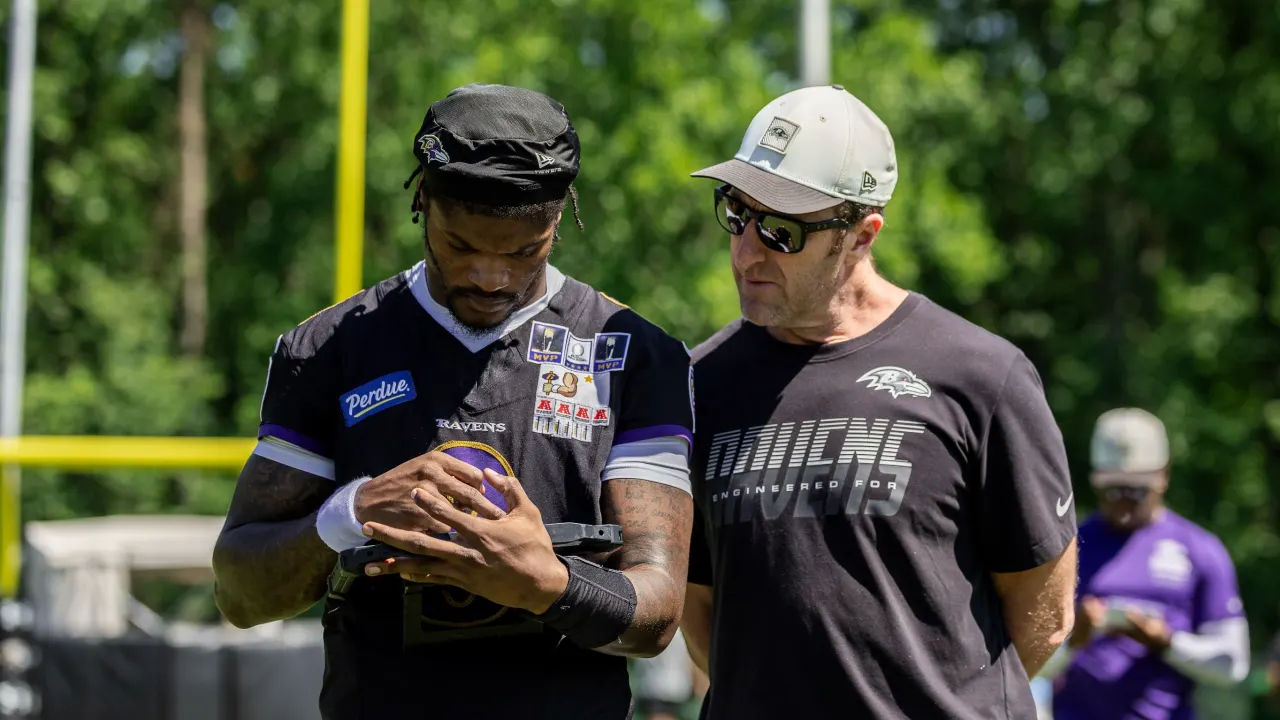
"Every day there's an hour and a half meeting in the morning. Then there's a walk-through, then an hour to get ready for practice, then a two-hour practice on the field, and then it's another one and a half hour meeting at the end of it. That's every day," Gill said, describing a four-day cycle before each game. "Compared to a rugby team that's probably meeting for an hour tops." Players also have roughly 200 plays to memorise - a level of classroom study rugby doesn't demand.
WATCH: Dr Nic Gill gives his verdict on the differences between NFL and Rugby
The scale floored him too. The Ravens travel 187 people to away games - 50 athletes and 130 staff, including 40 coaches. "It's rugby union just probably three-fold," Gill said. His own health and performance department runs 24 staff, compared with five to nine in a typical international rugby team.
Physically, though, Gill doesn't rate NFL athletes above their rugby counterparts. Ravens linemen average around 150 kilograms, with the biggest tipping 170kg -slightly larger than an All Blacks front row - but he says they perform repeated, maximal explosive efforts equivalent to roughly 25 tackles a game. Careers are brutally short, averaging three or four years, which he says explains the money and the entourages that follow star players.
Despite the mutual respect - Gill says several Ravens staff and coaches know the All Blacks' history and culture well, right down to quoting Sweep the Sheds.
WATCH: Catch up on the All Blacks history on US soil
So could an All Black make the switch? Gill believes so. He points to a former rugby loose forward from England who is on the Ravens' roster. He added 30 kilograms to convert to the offensive line, and reckons New Zealand's explosive, "fast-twitch" prop type would translate well, alongside skilful outside backs. The catch is the NFL's acceleration-deceleration pattern - sprinting, stopping dead, then changing direction. "That's what rugby players couldn't do," he said. "They'd have to learn that."
It isn't unprecedented. Weber noted the Philadelphia Eagles converted Australian rugby league player Jordan Mailata into one of the league's best offensive linemen. Gill's response: "100%."
Gill's comments came as the All Blacks prepare to face the Springboks in Baltimore this weekend, chasing a series-levelling win in Rugby's Greatest Rivalry after falling 29-24 in the third test.
Watch Inside the Black Jersey on allblacks.com or wherever you get your podcasts, including spotify and apple.
What happens when All Blacks and Black Ferns train with NFL stars? Find out HERE.